
Families and relationships are often expected to function smoothly without formal guidance. However, many individuals, couples, and families encounter periods where communication becomes strained, routines break down, or stress begins to affect day-to-day functioning.
In these situations, counseling provides a structured, professional environment where concerns can be addressed clearly and consistently. Rather than focusing only on immediate problems, counseling helps establish stability over time—through improved communication, defined expectations, and practical strategies that support long-term functioning.
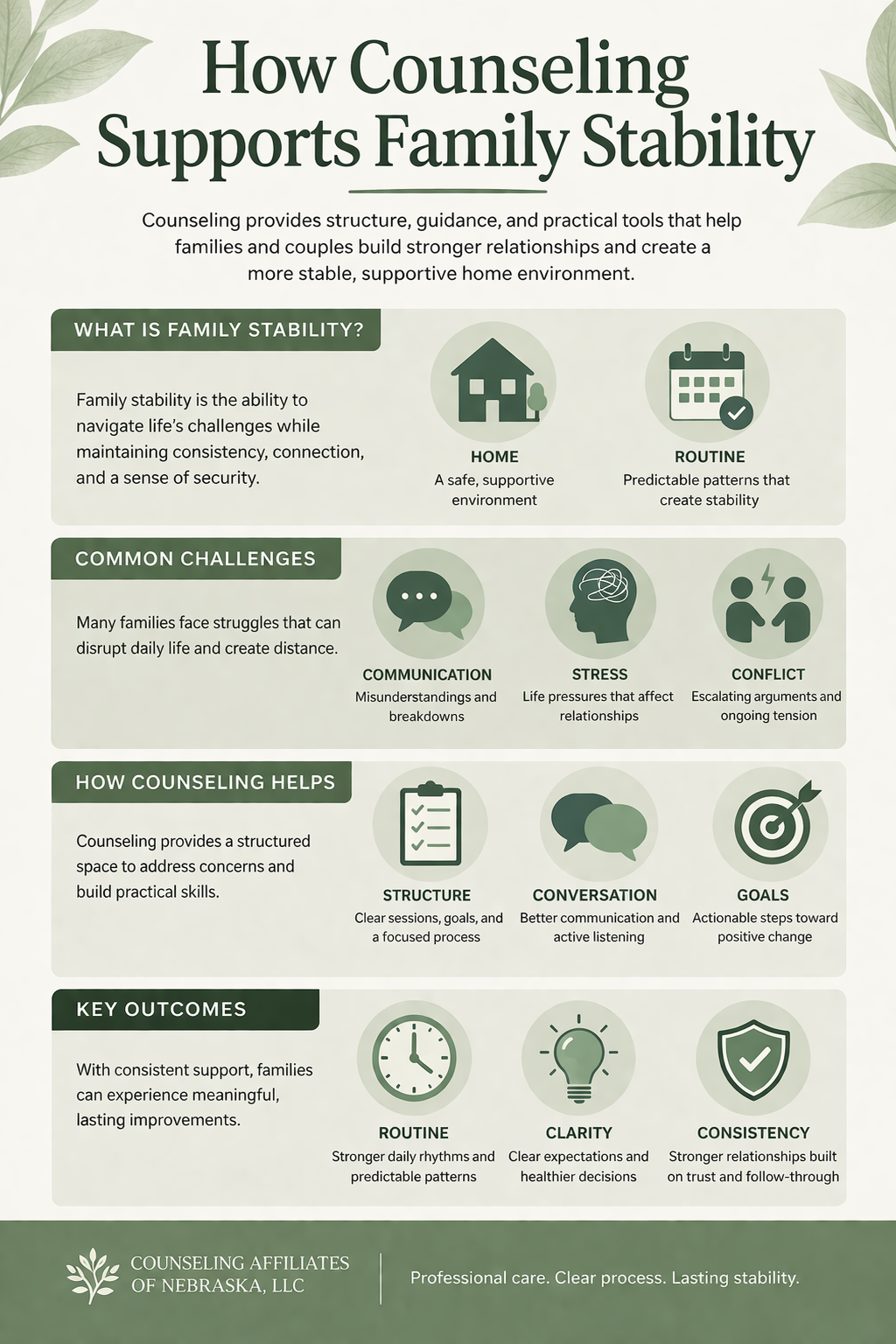
This article explains how counseling contributes to family stability, what that process typically involves, and what individuals and families can expect when beginning services.
What “Family Stability” Means in a Counseling Context
Family stability does not refer to the absence of stress or conflict. Instead, it reflects a family’s ability to:
Maintain consistent routines
Communicate effectively during both calm and stressful periods
Respond to challenges in a predictable and constructive way
Provide a sense of reliability and structure for all members
Periods of instability may include:
Ongoing conflict between partners
Difficulty managing parenting responsibilities
Behavioral or emotional concerns involving children or adolescents
Major life transitions (e.g., relocation, separation, job changes)
Accumulated stress that affects communication and decision-making
Counseling addresses these concerns by focusing on process rather than quick solutions. The goal is to create a stable framework that families can rely on over time.
How Counseling Provides Structure
One of the primary ways counseling supports stability is by introducing a clear and consistent structure.
Defined Time and Space
Counseling sessions occur at scheduled times in a professional setting. This consistency creates a reliable space where concerns can be addressed without interruption or escalation.
Clear Roles
A licensed clinician provides guidance, facilitates discussion, and maintains focus on identified goals. This helps prevent conversations from becoming unproductive or circular.
Goal-Oriented Approach
Rather than addressing concerns in a general way, counseling typically involves:
Identifying specific areas of concern
Establishing measurable goals
Monitoring progress over time
This structure reduces uncertainty and helps individuals understand what is being addressed and why.
Improving Communication Within Families and Relationships
Communication difficulties are one of the most common reasons individuals and families seek counseling. These difficulties may include:
Misunderstandings or assumptions
Escalating arguments
Avoidance of important topics
Difficulty expressing needs clearly
Counseling focuses on improving communication through practical, observable changes.
Identifying Patterns
Many communication issues are not isolated incidents but repeated patterns. A counselor helps identify:
How conflicts begin
What escalates them
How they typically end
Understanding these patterns allows families to interrupt them more effectively.
Developing Clear Expression
Counseling supports individuals in expressing:
Concerns in a direct and respectful manner
Expectations without ambiguity
Responses that reduce escalation
Establishing Listening Skills
Equally important is the ability to understand others accurately. Counseling may involve:
Practicing active listening
Clarifying intent before responding
Reducing reactive communication
Improved communication contributes directly to stability by reducing confusion and conflict.
Establishing Consistent Routines and Expectations
Stability within families is closely tied to consistency. When expectations are unclear or frequently changing, stress often increases.
Counseling helps families establish:
Predictable Routines
Examples include:
Consistent schedules for daily activities
Structured approaches to responsibilities
Clear expectations around time and commitments
Defined Boundaries
Boundaries help clarify roles and responsibilities. In counseling, this may include:
Parental expectations for children or adolescents
Agreements between partners regarding responsibilities
Limits that support respectful interaction
Accountability
Counseling provides a space to review whether agreed-upon expectations are being followed. This accountability supports long-term consistency.
Supporting Couples in Building Stability
Couples counseling focuses on strengthening the foundation of a relationship through structured discussion and problem-solving.
Common areas addressed include:
Communication breakdowns
Conflict resolution
Trust and reliability
Division of responsibilities
Long-term planning
Reducing Conflict Escalation
Counseling helps couples recognize early signs of conflict and apply strategies to prevent escalation.
Aligning Expectations
Differences in expectations—regarding roles, responsibilities, or priorities—can lead to ongoing tension. Counseling provides a setting to clarify and align these expectations.
Reinforcing Consistency
Consistency in behavior and communication contributes to a more predictable and stable relationship environment.
Helping Families Navigate Transitions
Life transitions often disrupt established routines and expectations. These transitions may include:
Changes in family structure
School or developmental changes
Employment or financial shifts
Relocation
Counseling supports families during transitions by:
Clarifying new roles and responsibilities
Establishing updated routines
Addressing concerns before they escalate
This proactive approach reduces uncertainty and helps families adapt more effectively.
Addressing Individual Needs Within the Family System
Family stability is influenced by each individual within the system. Counseling may involve:
Individual sessions alongside family sessions
Focused support for specific concerns (e.g., anxiety, behavioral issues)
Coordination between individual and family goals
Addressing individual needs contributes to overall stability by ensuring that concerns are not overlooked or misunderstood.
What to Expect When Starting Counseling
Understanding the process of counseling can reduce uncertainty and help individuals feel more prepared.
Initial Contact
The first step typically involves contacting the practice to request an appointment. During this stage:
Basic information is collected
The type of service is clarified (individual, couples, or family counseling)
Next steps are explained
Intake Session
The initial session focuses on:
Understanding the concerns that led to seeking counseling
Gathering relevant background information
Identifying initial goals
Ongoing Sessions
Subsequent sessions involve:
Structured discussion of identified concerns
Development and application of strategies
Ongoing review of progress
The pace and focus of counseling depend on the specific needs of the individuals or family involved.
The Role of Professional Guidance
Counseling provides a level of objectivity that is often difficult to achieve independently.
A licensed clinician:
Maintains a neutral and professional perspective
Applies evidence-based approaches
Ensures discussions remain productive and goal-focused
This professional structure supports stability by preventing conversations from becoming unstructured or reactive.
Long-Term Benefits of Counseling for Stability
While counseling may begin in response to a specific concern, its benefits often extend beyond the initial issue.
These may include:
More consistent communication patterns
Increased clarity in roles and expectations
Improved ability to manage future challenges
Greater predictability in daily functioning
The emphasis on structure and process helps families and couples maintain stability over time.
When to Consider Counseling
Counseling may be appropriate when:
Communication has become consistently difficult
Conflict is frequent or unresolved
Family routines feel inconsistent or unmanageable
A transition is creating uncertainty
Additional structure and guidance would be beneficial
Seeking counseling does not require a crisis. Many individuals and families begin counseling to establish stability before concerns escalate.
Taking the Next Step
Beginning counseling is a practical step toward establishing clarity and stability within relationships and family systems.
At Counseling Affiliates of Nebraska, services are designed to provide:
Clear processes and expectations
Structured, professional support
Consistent follow-through
If you are considering counseling for yourself, your relationship, or your family, the next step is a straightforward conversation about your needs and available services.
Request an Appointment to learn more about how counseling can support stability and long-term functioning.